
46a. The Age of the Automobile
Perhaps no invention affected American everyday life in the 20th century more than the automobile.
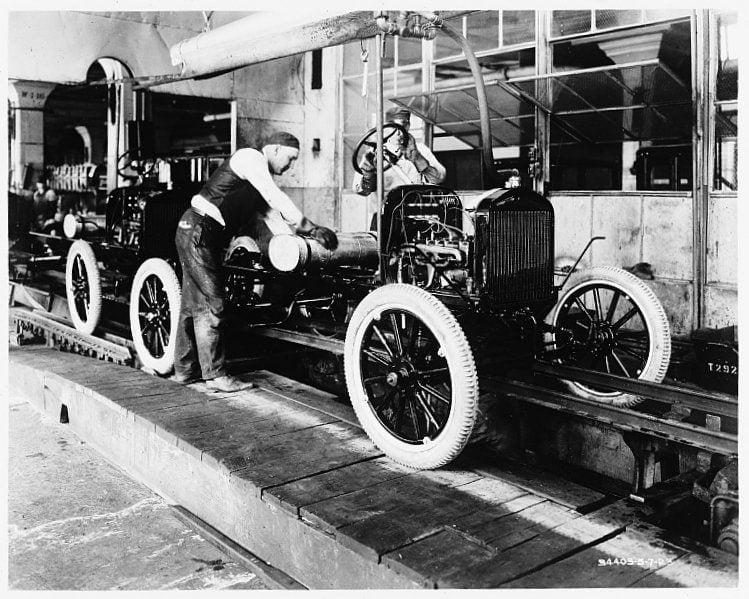
Although the technology for the automobile existed in the 19th century, it took Henry Ford to make the useful gadget accessible to the American public. Ford used the idea of the assembly line for automobile manufacturing. He paid his workers an unprecedented $5 a day when most laborers were bringing home two, hoping that it would increase their productivity. Furthermore, they might use their higher earnings to purchase a new car.
Ford reduced options, even stating that the public could choose whatever color car they wanted — so long as it was black. The Model T sold for $490 in 1914, about one quarter the cost of the previous decade. By 1920, there were over 8 million registrations. The 1920s saw tremendous growth in automobile ownership, with the number of registered drivers almost tripling to 23 million by the end of the decade.
Economic Spin-offs
The growth of the automobile industry caused an economic revolution across the United States. Dozens of spin-off industries blossomed. Of course the demand for vulcanized rubber skyrocketed. Road construction created thousands of new jobs, as state and local governments began funding highway design.
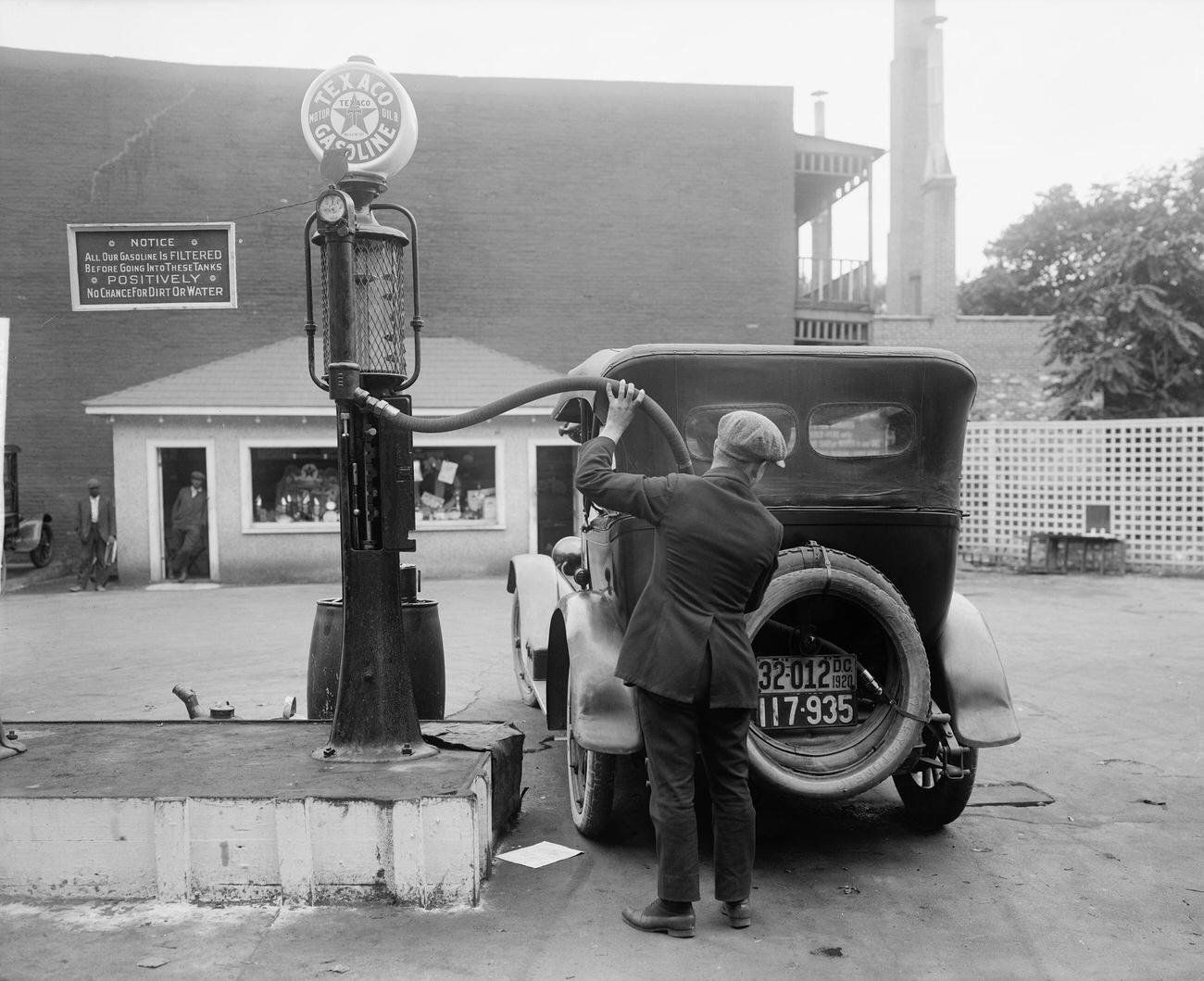 By the late 1920s, service stations like this Texaco pump had become fixtures in towns and along highways across the country. Note the sign emphasizing fuel purity: “Notice - All our gasoline is filtered before going into these tanks. Positively no chance for dirt or water.”.
Even the federal government became involved with the Federal Highway Act of 1921. Gas stations began to dot the land, and mechanics began to earn a living fixing the inevitable problems. Oil and steel were two well-established industries that received a serious boost by the demand for automobiles. Travelers on the road needed shelter on long trips, so motels began to line the major long-distance routes.
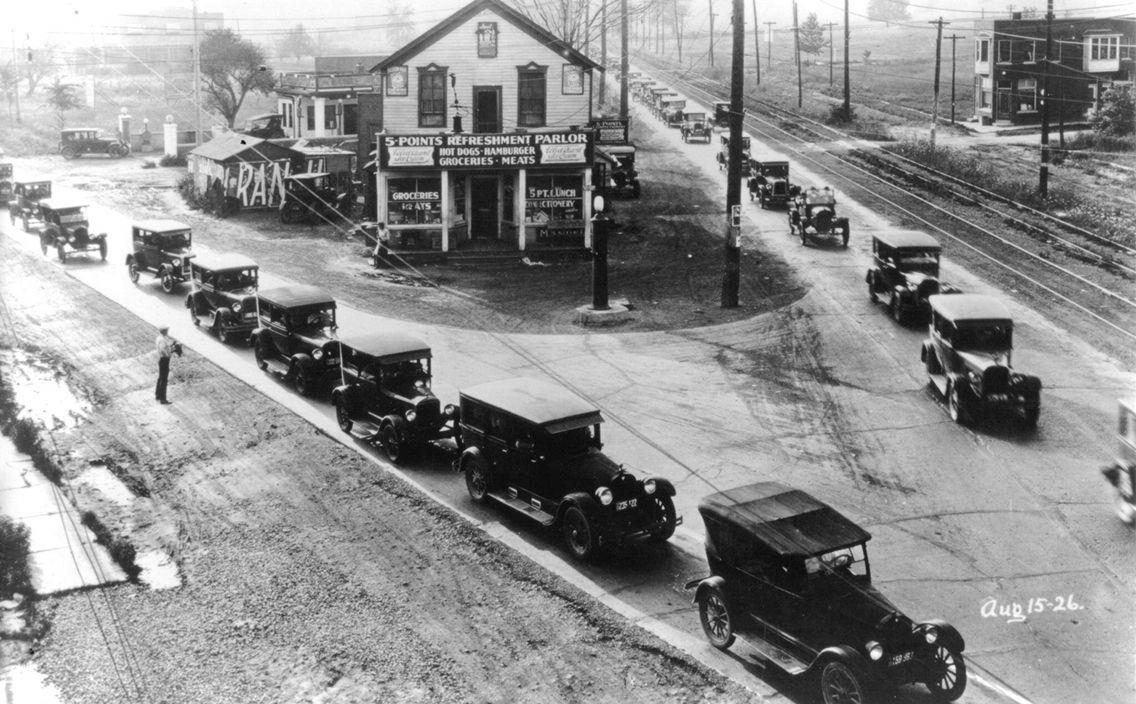
Even cuisine was transformed by the automobile. The quintessential American foods — hamburgers, french fries, milk shakes, and apple pies — were hallmarks of the new roadside diner. Drivers wanted cheap, relatively fast food so they could be on their way in a hurry. Unfortunately, as new businesses flourished, old ones decayed. When America opted for the automobile, the nation's rails began to be neglected. As European nations were strengthening mass transit systems, individualistic Americans invested in the automobile infrastructure.
Effects of the Automobile
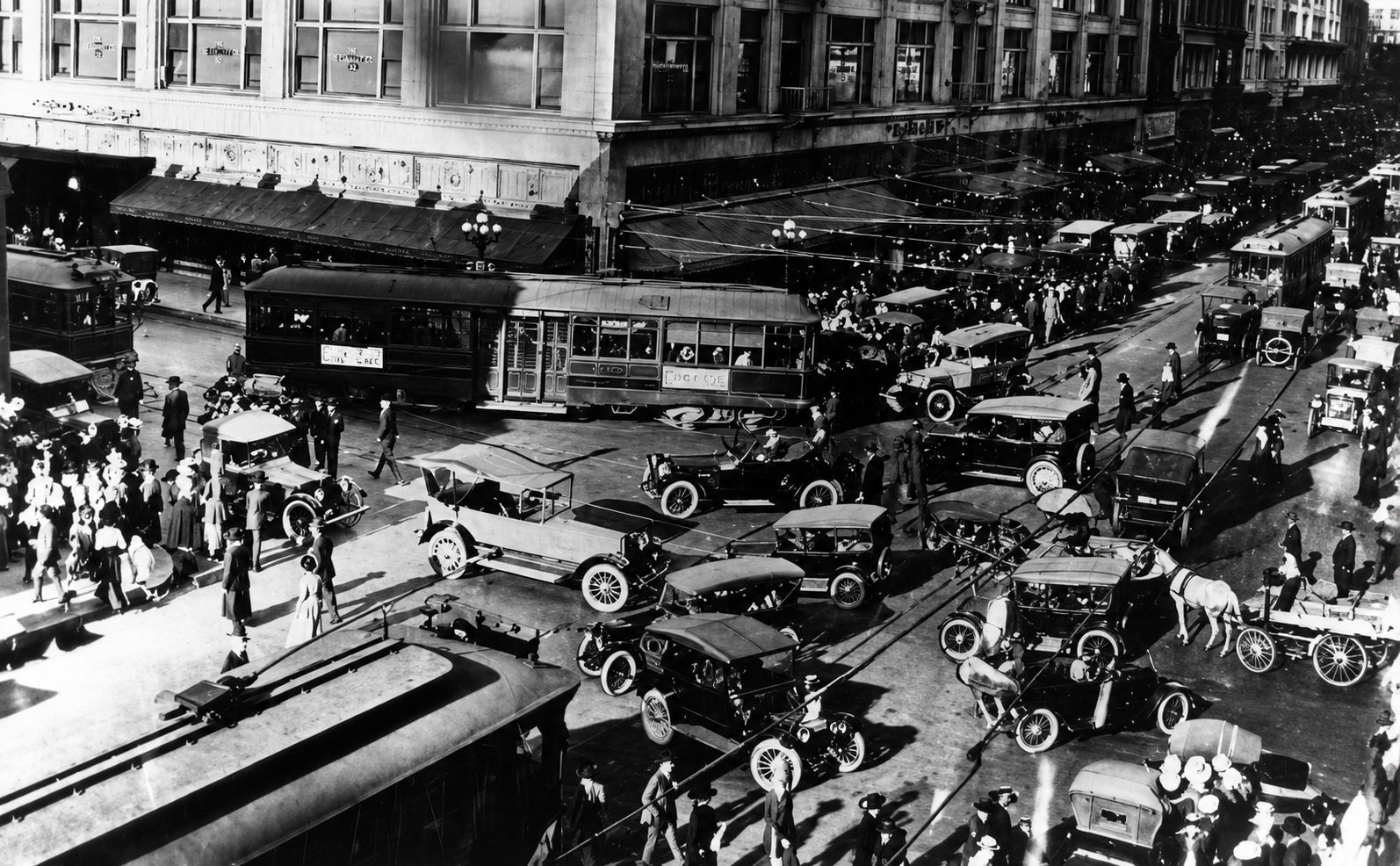
The social effects of the automobile were as great. Freedom of choice encouraged many family vacations to places previously impossible. Urban dwellers had the opportunity to rediscover pristine landscapes, just as rural dwellers were able to shop in towns and cities. Teenagers gained more and more independence with driving freedom. Dating couples found a portable place to be alone as the automobile helped to facilitate relaxed sexual attitudes.