
Spy System 1777: Page I
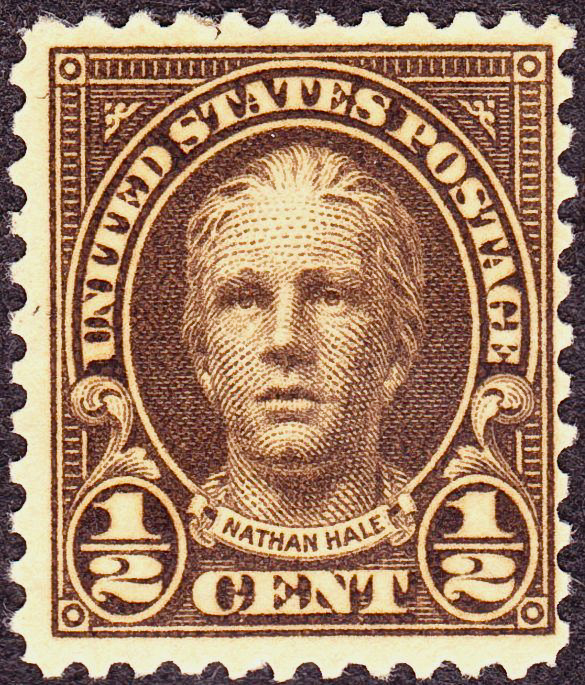
At the beginning of the Revolution, American patriots had limited success spying on their British adversaries. The Americans had little craft in such secrecy, a craft already much refined in Europe. Witness Nathan Hale's brave but foolhardy attempt to spy on the British in New York City in 1776, an amateur endeavor that virtually assured his capture and death. Hale was a great patriot, but an incompetant spy, and his chief contributions to the American cause were his (alleged) inspirational dying words, "I regret that I have but one life to give for my country"
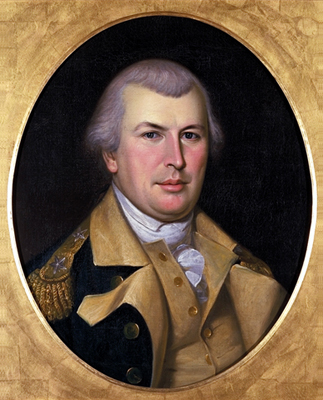
This is a picture of Nathaniel Greene.
No pictures are available for Clark
(Perhaps because he was such a good spy)
By the time of the Pennsylvania Campaign of 1777, American spies had acquired far more finesse in their risky business. Perhaps Hale's well-publicized death had acted as a serious warning. With the British capture of Philadelphia on September 26, 1777, and with the Continental Army opposing the invaders declining in numbers, equipment and health, General Washington needed immediate, first-hand intelligence of the enemy's intentions, movements and condition. To supervise this vital work he sought a man of intelligence and discretion, familiar with the local populace and territory, who could reliably provide vital information. The General's choice fell on Major John Clark Jr. of Pennsylvania, Aide-de-Camp to Major General Nathaniel Greene, possibly at the recommendation of General Greene. Clark, the Commander-in-Chief was advised, was uniquely qualified to undertake this perilous business. Clark reportedly readily volunteered for the dangerous assignment.
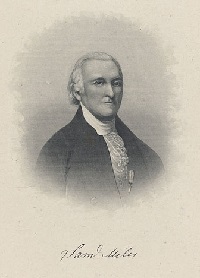
Samuel Miles
Engraving by Henry Bryan Hall
Clark, born in Lancaster, had studied law and been admitted to practice in York County, where he made his adult home. As early as the summer of 1775 he had joined a Pennsylvania Rifle Corps, accompanying it to the siege of Boston. On March 15, 1776 he was commissioned 1st Lieutenant in Colonel Samuel Miles' Pennsylvania Rifle Regiment. Happily, he was not with that regiment when it was captured at Fort Washington, New York, in November; having been appointed Major in Colonel Richard McAllister's Battalion of Pennsylvania Militia. Briefly furloughed from service, he took the occasion to return to York and marry a daughter of Captain Christian Bettinger of the State Militia. On January 14, 1777 he rejoined the regular Continental Army as Major and Aide-de-Camp to Major General Greene, an official office he retained while acting as spy-master for the army.
Clark's information was not always 100% accurate, but the correspondence between Washington and Clark reveals the exceeding dangers experienced by Clark and his network of spies as they attempted to supply the Commander-in-Chief with the best advice possible. Extracts taken from this correspondence, mostly from the frequent letters of Clark to Washington during the latter part of 1777, illustrate the excellence of the corps of spies enlisted by Clark, and the sharp perception and determined perseverence of Clark himself as he tirelessly rode, despite declining health, around the perimeters of enemy camps, reporting his and his subordinates' observations, as well as hearsay and rumors, back to his chief.
Clark's first communications to Washington commenced not near Philadelphia, but some thirty miles to the west of the city, from the Red Lion Tavern (now Lionville) in Uwchlan Township, Chester County on October 6. These communications, at 5 P.M. and 10 P.M., were directed to Washington at his camp at Pawling's Mill, and were principally concerned with reports on the recent (October 4) Battle of Germantown. The first letter confirmed the death of British Brigadier James Agnew as the result of wounds received in the late battle, and noted that "Several Quakers from the city say that upwards of two hundred wagons came in" to the city "with wounded (British) soldiers." Another informant, arrived from Philadelphia, states, as noted in the second letter, that "the enemy suffered prodigiously" in the battle, and that British officers conceded that Washington had "completely surprised" the enemy by his attack.
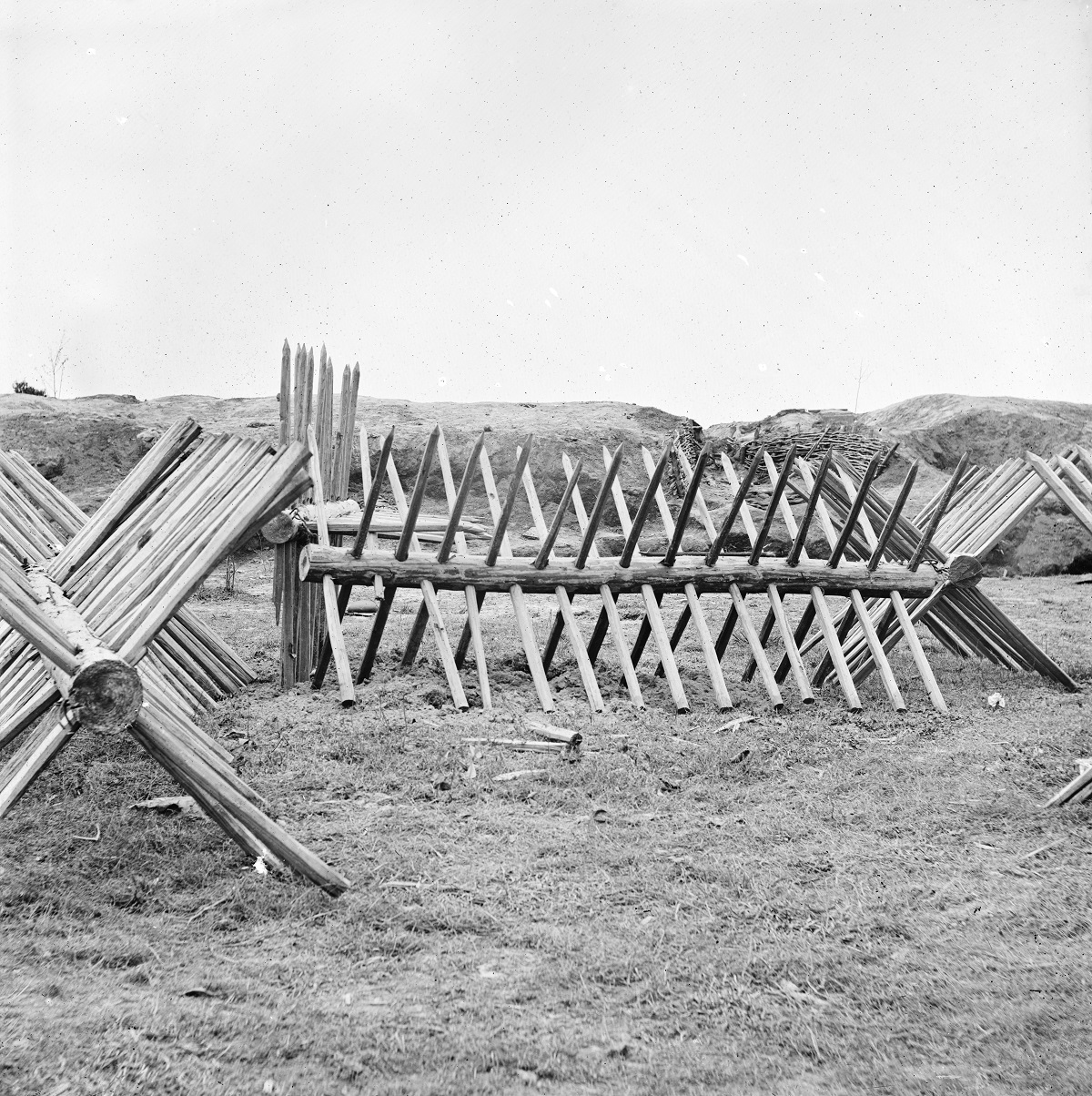
Cheveaux de frieze
Click for more information
Clark also reported the fall of the American fort at Billingsport, on the New Jersey side of the Delaware River south of Philadelphia, and that the enemy "have got up the lower tier of the cheveaux de frieze" which the Americans had sunk in the river to prevent British ships access to Philadelphia. Also, "Provisions were scarce" in Philadelphia, and the enemy were frequently sending wagon trains to Chester under heavy escort to procure supplies from the British fleet stationed in the river. Clark suggested that "If a few troops were sent down the Schuylkill" near its mouth "it would prevent" this enemy traffic.
Some of Clark's next correspondence with the Commander-in-Chief is lost to history. That letters were written is proved by Washington's letter to Clark from the camp at Whitpain of October 23, which thanked Clark "for your vigilance and exertions," and desired Clark "to continue them for obtaining such information as may be material respecting the Enemy." Evidently Clark had reported a rumored imminent British abandonment of Philadelphia, which Washington discounted. "Before they do it," the Commander-in-Chief noted, "they must be entirely convinced of the impractibility of carrying Fort Mifflin" on the Pennsylvania side of the Delaware, and Fort Mercer at Red Bank, New Jersey. These defenses, with the cheveaux-de-frise, formed hopefully insuperable impediments against British shipping reaching Philadelphia.
Page II